Use a range for budgeting, then obtain a surveyed quote
Commercial roof replacement cost depends on the roof system, size, condition, access and the need to keep the building operating. A square-metre rate can help with an early budget, but it cannot price concealed damage, specialist removal or the practical constraints of your premises.
For a current reference point, Nationwide Industrial Roofing’s 2026 cost guide publishes roughly £90–£180 per m² for a straightforward industrial roof replacement. This is that contractor’s indicative UK range, not a national measured average or a quote from Paul Jones Roofing Contractor. Small commercial roofs, complicated buildings and unusual specifications may fall outside it.
A worked example shows both the use and the limitation
Applying that indicative rate to a 500 m² roof gives an initial arithmetic range of £45,000–£90,000. It is a budgeting illustration, not a surveyed project estimate. Confirm whether any rate you are comparing includes VAT, stripping, insulation, access equipment and disposal before carrying it into a business plan.
For premises in Blackpool, the local quotation needs to reflect the actual building and scope. Two quotes for the same roof can differ because one allows for a new deck and the other assumes retention. Request a schedule of included items and provisional allowances so the lower price does not hide work that will be added later.
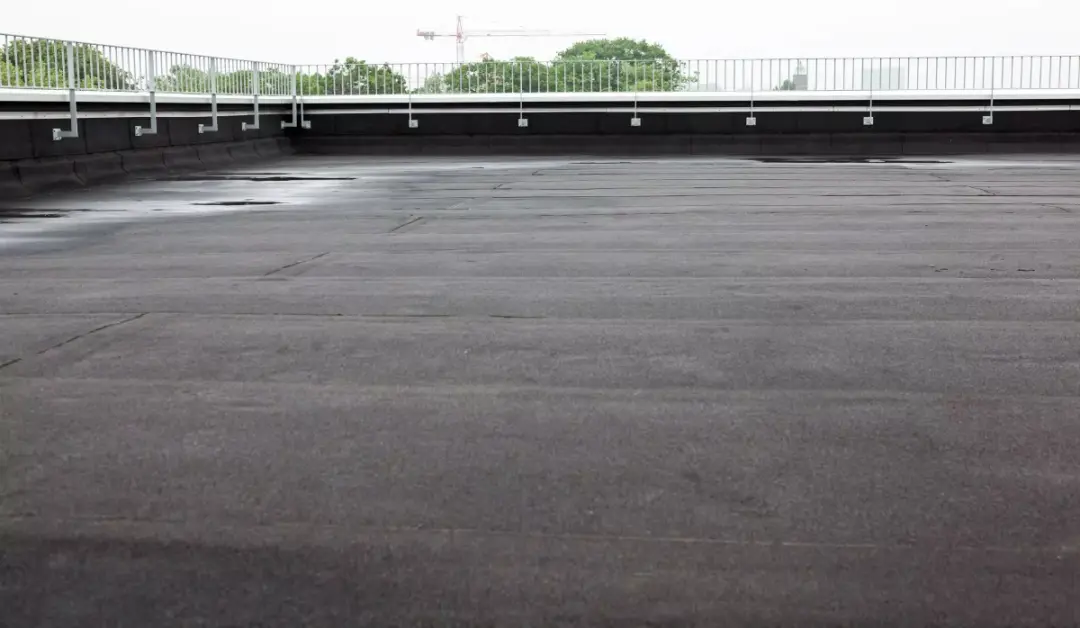
The existing layers drive much of the uncertainty
The visible surface is only the start of the assessment. The deck, insulation, vapour-control layer and structural support may need investigation. Saturated insulation or corroded support changes the project from replacing a covering to rebuilding part of the roof assembly.
A suitable overlay can sometimes avoid wholesale stripping, but only where the existing construction is sound, compatible and able to support the new work. Ask for the evidence behind that recommendation. Survey costs can be worthwhile if they replace a vague contingency with a clearer quantity of work. No contractor can responsibly guarantee the condition of layers that have not been assessed.
Compare different systems on the same specification
A replacement metal-sheet roof is not directly comparable with an EPDM or GRP flat-roof proposal. The building’s geometry and use may make only certain systems appropriate. Fire performance, thermal design, wind resistance and detailing around plant all affect the specification and price.
Ask for the named products and build-up rather than a description such as premium roofing. Compare the same insulation performance, drainage work, edge details and guarantees across quotations. If one option costs more, establish which benefit it buys. A longer materials guarantee and broader workmanship cover are different forms of value, so each needs to be stated.
Access and business continuity are real project costs
Scaffolding, edge protection, lifting equipment and protected routes can make a substantial difference to the total. Restricted delivery access or work over a busy public area may require more planning than an empty industrial site. Those provisions should be included in the contract scope, not treated as optional extras.
Also price how the premises will be protected while the old roof is open. Phased sections, temporary weatherproofing and out-of-hours work can change labour and programme costs. Tell the contractor about production schedules, customer access and stock that cannot tolerate moisture. A plan that reduces interruption may be worth more to the business than the lowest roof-only rate.
Allow for investigations and special removal requirements
Older roofs may contain asbestos-containing materials. Where work could disturb them, arrange the appropriate assessment and method before removal. Do not price unknown sheets as ordinary waste or assume that repainting them confirms they are safe to strip.
Drainage alterations, replacement rooflights and relocating rooftop equipment should also be listed. Decide which are essential parts of the roof replacement and which are optional improvements. A written contingency can address genuinely uncertain conditions, but request a clear process for approving changes and agreeing prices. This makes the budget manageable when opening the roof reveals something unexpected.
Ask for a quotation you can use to make a decision
A useful commercial roofing quotation states quantities, the proposed system, exclusions, provisional sums, programme and payment stages. It explains the cover provided and identifies who handles approvals and completion records. Confirm the treatment of VAT and the validity period of the price.
Paul Jones Roofing Contractor offers commercial roofing installation and replacement services for local premises. When seeking a quote for a building in Blackpool, provide roof dimensions if known, access restrictions and your preferred working windows. Ask for a site assessment and an itemised proposal. That turns a broad internet rate into a project budget tied to the roof you actually own.
Summary
A commercial replacement budget needs more than a cost per square metre. Check the existing layers, agree the system and include access, disposal and business protection in the scope. Use the link below to discuss a surveyed commercial roofing proposal with Paul Jones Roofing Contractor.