Make prevention a routine with an owner
Preventing commercial roof leaks means keeping water moving to the drainage points, preserving sound junctions and controlling changes made by other trades. No roof can be promised never to leak, but a documented maintenance routine can identify developing defects before rainfall exposes them.
Assign responsibility for arranging inspections and following up the findings. A report that nobody acts on offers little protection. For businesses in Blackpool, commercial roofing maintenance should be part of premises management, with access restrictions, operating hours and sensitive equipment recorded alongside the roof’s technical information.
Build a baseline record before problems appear
Keep a roof plan showing outlets, rooflights, plant and the different coverings. Store the installation documents, guarantee conditions and repair history with it. Add dated photographs from professional inspections so future visits can distinguish a new defect from an unchanged detail.
Set the inspection interval to the roof system and exposure, and arrange additional checks after severe weather or significant roof access. Trees, nearby construction and heavy deposits can increase drainage maintenance needs. A calendar reminder is useful only if it leads to a defined inspection and a record of what was found, what was corrected and what remains outstanding.
Keep the whole drainage route working
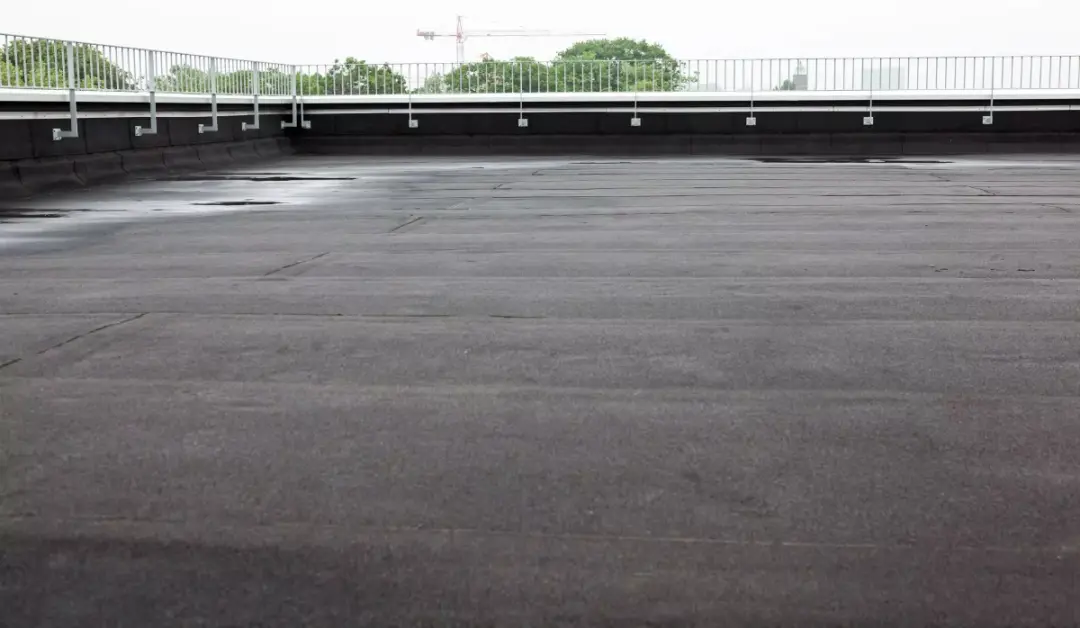
Clearing a roof outlet is not enough if the connected pipe or gutter remains restricted. The inspection should check the route from the roof surface to discharge, including leaf guards and any emergency overflow. Debris should be removed appropriately rather than pushed into the pipe where it can cause another blockage.
The May 2026 Bauder commentary on BS 6229:2025 describes a 1:80 minimum completed fall for most roofs and the need to account for obstructions. On an existing roof, recurring ponding warrants a level and drainage assessment. Simply cleaning more often cannot correct a surface that slopes away from its outlets.
Give penetrations and edges their own checklist
Pipes, rooflights, wall abutments and plant supports interrupt the waterproof layer. The maintenance plan should identify these details individually so they are not overlooked during a general walkover. Look for movement, open joints, damaged seals and changes to the surrounding covering.
Check perimeter trims and sheeted-roof fixings as well as the middle of the roof. A detail that has moved needs a compatible, properly designed repair. Repeatedly adding sealant can conceal the original fault and complicate later work. Ask the contractor to establish why the connection failed and how the remedy restores the intended drainage and movement allowance.
Control access by maintenance and installation trades
Air-conditioning engineers and other trades need a route and working method that protect the roof. Arrange suitable walkways or temporary protection where required, keep the work area free from sharp waste and avoid dragging equipment across the waterproofing. Check the roof after their work finishes.
Bauder’s guidance for following trades recommends protecting waterproofing, supporting introduced equipment appropriately and clearing debris from outlets when works finish. Have new fixings and penetrations agreed with the roofing contractor before they are made. An access log links later symptoms to recent work and helps avoid a cycle of damage that nobody owns.
Specify compatible repairs and verify completion
Different membranes require different repair materials and preparation. A repair product that bonds to one surface may perform poorly on another. The specification should name the roof system, explain substrate preparation and identify any weather restrictions on application.
Ask for photographs of concealed stages and completed details, then add the work to the roof record. If leaks have been recurrent, agree how the result will be assessed, including a follow-up where appropriate. Do not use improvised flood testing: adding water can overload a roof or affect the building. Any testing method should be suitable for the construction and planned by competent professionals.
Prepare a response that limits disruption
Even a maintained roof needs a response plan. Staff should know how to report a drip, who can restrict the affected area and how to protect stock safely. Record the weather and location, but leave roof access and electrical assessment to the relevant professionals.
Paul Jones Roofing Contractor offers planned commercial roof maintenance and repairs on the Fylde Coast. A premises manager in Blackpool can use the baseline record to agree a proportionate inspection scope and priorities. The most useful plan combines prevention with a clear response route, so small defects receive attention and urgent problems do not wait for the next scheduled visit.
Summary
Leak prevention works best when drainage care, detail inspections and trade access are managed together. Keep records and act on findings, using repairs compatible with the roof system. Explore the commercial roofing service below to discuss installation details and ongoing roof care with Paul Jones Roofing Contractor.