Watch for changes before operations are disrupted
A commercial roof needs attention when water enters the building, drainage changes, fixings or edge details deteriorate, or new damage appears after weather or maintenance work. You do not need to wait for a large leak. A small change above stock, machinery or a busy public area can have consequences beyond the cost of repairing the roof.
Establish what has changed and which part of the business is exposed. In premises around Blackpool, that might mean a stain above a shop floor, a damp storage corner or water near an electrical installation. An inspection by a commercial roofing contractor should connect the defect with its operational risk, rather than treating every roof as a vacant building.
Read the evidence inside the premises
Ceiling staining, peeling finishes and dampness around roof penetrations can identify a developing problem. Keep a dated log of where symptoms appear and which weather precedes them. Repeated staining in a different location may indicate water travelling within the roof, rather than a new hole directly above the mark.
Also record unexplained changes in indoor conditions, but avoid diagnosing them from energy bills alone. Heating use can change with occupancy, operating hours or equipment. If roof insulation is suspected to be wet, ask for evidence from an appropriate investigation. A roof should not be replaced because a bill rose without establishing how the envelope is performing.
Check drainage behaviour and perimeter details
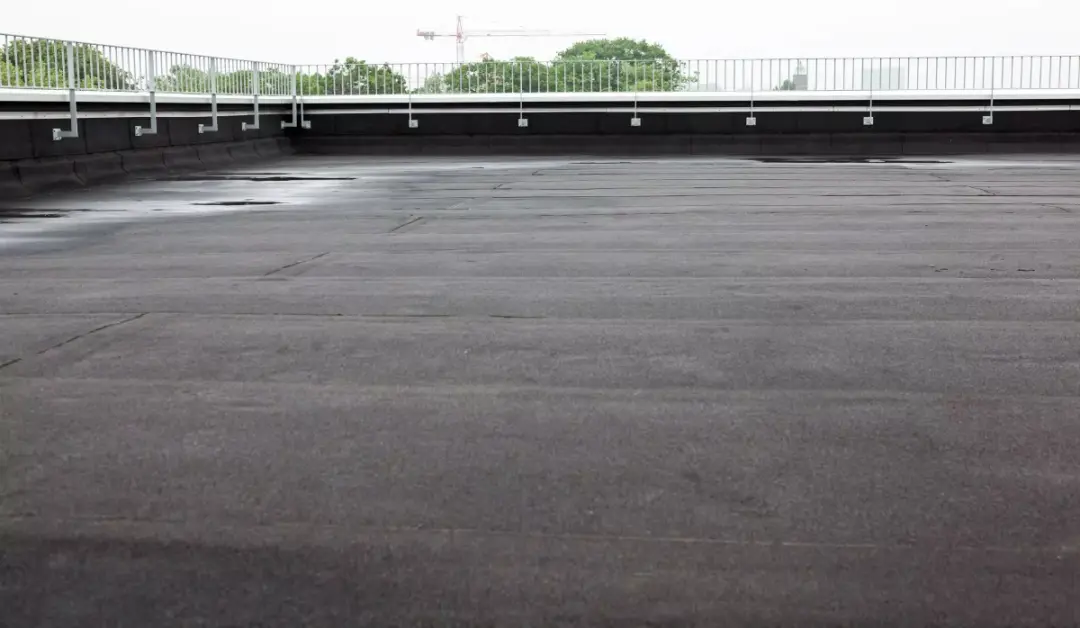
Overflows, blocked gutters and water lingering in new areas warrant attention. Debris can restrict an outlet, while a change in levels can redirect water away from it. Staff can report visible changes from safe accessible positions; clearing an outlet on a fragile roof requires planned access and the right competence.
At the perimeter, displaced flashings, loose trims and corrosion can reveal weaknesses that a photograph of the roof centre misses. On sheeted roofs, the condition of laps, coatings and fixings matters. At rooflights, check for staining and deteriorating seals. The contractor should identify the roof type before prescribing a membrane patch or coating.
Pay attention after other trades have visited
Roof-mounted equipment creates interfaces that need coordination. Air-conditioning maintenance, cable runs and new plant supports can damage the surface or alter how people move across it. Record who accessed the roof and what work they undertook, particularly if symptoms begin afterwards.
Look for reports of dropped tools, removed protection, new fixings or waste left near drainage points. Do not assume all recent damage is storm-related. A clear contractor handover and a roof-access log make it easier to investigate later defects. New equipment should also prompt a review of supporting loads and penetrations before installation, rather than after the roof has started leaking.
Use surveys to understand concealed deterioration
A roof can appear reasonably tidy while its insulation or supporting layers hold moisture. Depending on construction, a condition assessment may include opening selected areas, thermal investigation or moisture mapping. Each technique has limitations and should be interpreted with the visible findings.
Bauder’s current diagnostics information describes moisture mapping that can assess moisture concentration at depths up to 300 mm. That is a capability of its described method, not a guaranteed detection depth for every survey instrument. Ask what the proposed survey can establish and how any readings will be checked before deciding which layers to retain.
Prioritise emergencies and control access
Active water entering electrical equipment, a bulging ceiling, falling material or a visible structural change requires prompt action to protect people. Restrict access to the affected area, inform the responsible person and obtain appropriate professional assistance. Do not send an employee onto the roof to look for the entry point.
HSE’s roof-work guidance highlights fragile rooflights and sheets as serious fall hazards. Treat the roof as fragile unless a competent assessment establishes otherwise. Even routine inspections need a safe method. Arrange access protection and risk controls with the contractor; a quick look is still work at height.
Turn the inspection into a usable maintenance plan
Request a report that separates urgent defects, planned repairs and items to monitor. It should identify each roof area, include photographs and explain the likely causes. Where replacement is proposed, ask why repairs or a compatible overlay would not provide a suitable outcome.
Paul Jones Roofing Contractor provides commercial roof installation, repairs and planned maintenance across the Fylde Coast. For a business in Blackpool, give the contractor operating hours, sensitive areas and any limits on access. The resulting plan should allow you to budget and arrange works around the premises, with clear responsibilities for temporary protection and the follow-up inspection.
Summary
Commercial-roof warning signs are most useful when recorded early and assessed against the risk to the premises. Gather evidence, protect affected areas and request a prioritised inspection report. The commercial roofing service page below provides a route to discuss repairs and maintenance with Paul Jones Roofing Contractor.